
웹 표준에서 탄생
지난 5년 동안 웹 표준에서는 주로 W3C / WHATWG 및 ECMAScript 기술 위원회( TC39 )에 의해 주도되어 ECMAScript 6 , 7 , 8 , 9 이상, 웹 구성 요소 , 사용자 정의 요소 , 템플릿 및 슬롯 , Shadow DOM 등
아래 그림과 같이 이는 웹 스택의 극적인 변화로 이어집니다. 프레임워크가 필요한 많은 기능이 이제 표준이 되었습니다.
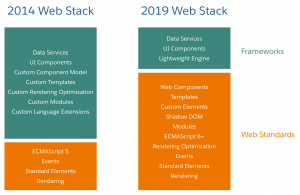
Lightning 웹 구성 요소는 최신 웹 스택을 기반으로 구축된 최신 프레임워크로 탄생했습니다. 다른 표준 중에서도 ECMAScript 6 이상에서 사용할 수 있는 사용자 정의 요소, 템플릿, 데코레이터, 모듈 및 기타 새로운 언어 구성을 활용합니다.
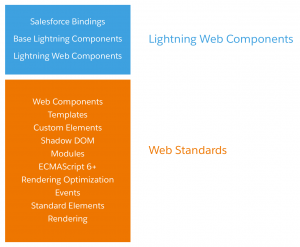
Lightning 웹 구성 요소에는 세 가지 주요 부분이 있습니다.
- Lightning 웹 구성 요소 프레임워크 : 프레임워크의 엔진입니다.
- 기본 Lightning 구성 요소: 모두 사용자 정의 요소로 구축된 70개 이상의 UI 구성 요소 세트입니다.
- Salesforce 데이터 및 메타데이터, 데이터 캐싱 및 데이터 동기화에 대한 선언적 및 명령적 액세스를 제공하는 전문 서비스 세트인 Salesforce 바인딩 입니다.
프레임워크 오픈소스
오늘 우리는 Lightning 웹 구성 요소 프레임워크의 오픈 소스를 발표하게 되어 기쁘게 생각합니다. 이를 통해 개발자는 로드맵에 기여하고, 소스 코드를 탐색하여 더 깊은 수준에서 프레임워크를 배우고, Salesforce에서 구축할 때 동일한 JavaScript 프레임워크를 사용할 수 있습니다. 또는 다른 플랫폼.
하나의 프레임워크, 모든 플랫폼
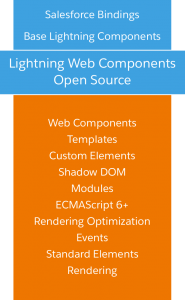
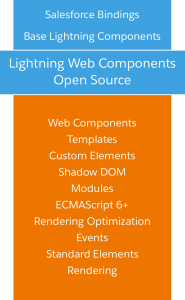
위 다이어그램에 표시된 것처럼 Lightning 웹 구성 요소 프레임워크는 Salesforce 플랫폼에 종속되지 않습니다. 대신 Salesforce 특정 서비스가 프레임워크 위에 구축됩니다. 계층화된 아키텍처가 의미하는 바는 이제 Lightning 웹 구성 요소 프레임워크를 사용하여 어디에서나 실행되는 웹 앱을 구축할 수 있다는 것입니다.
과거에는 개발자가 애플리케이션의 다양한 측면을 구축하기 위해 다양한 프레임워크를 사용해야 하는 경우가 많았습니다. 예를 들어 Aura를 사용하여 Salesforce에서 직원용 애플리케이션을 구축하고 React, Angular 또는 Vue에서 Heroku 또는 기타 플랫폼에서 애플리케이션의 고객 참여 측면을 구축할 수 있습니다. 이제 Lightning 웹 구성 요소를 사용하여 응용 프로그램의 양면을 모두 구축할 수 있습니다. 이점은 상당합니다. 단일 프레임워크만 학습하면 되며 앱 간에 코드를 공유할 수 있습니다. Lightning 웹 구성 요소는 최신 웹 표준을 기반으로 구축되었으므로 최신 패턴과 모범 사례를 기반으로 한 최첨단 프레임워크를 사용하고 있다는 것을 알 수 있습니다.
A few months ago, we introduced Lightning Web Components, a new JavaScript framework that leverages the web standards breakthroughs of the last five years. Today, we are excited to announce the open sourcing of the Lightning Web Components framework, allowing developers to contribute to the roadmap and to use the same framework whether they are building applications on Salesforce or on any other platform.
Born in Web Standards
The last five years have seen an unprecedented level of innovation in web standards, mostly driven by the W3C/WHATWG and the ECMAScript Technical Committee (TC39): ECMAScript 6, 7, 8, 9 and beyond, Web components, Custom elements, Templates and slots, Shadow DOM, etc.
As illustrated below, this lead to a dramatic transformation of the web stack. Many features that required frameworks are now standard.
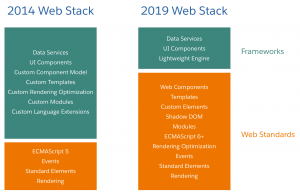
Lightning Web Components was born as a modern framework built on the modern web stack. Among other standards, it leverages custom elements, templates, decorators, modules, and other new language constructs available in ECMAScript 6 and beyond.

Lightning Web Components has three key parts:
- The Lightning Web Components framework: the framework’s engine.
- The Base Lightning Components: a set of over 70 UI components all built as custom elements.
- Salesforce Bindings, a set of specialized services that provide declarative and imperative access to Salesforce data and metadata, data caching, and data synchronization.
Open sourcing the framework
Today, we are excited to announce the open sourcing of the Lightning Web Components framework, allowing developers to contribute to the roadmap, learn the framework at a deeper level by exploring the source code, and use the same JavaScript framework whether they are building on Salesforce or any other platform.
One framework, any platform
As pictured in the diagram above, the Lightning Web Components framework doesn’t have dependencies on the Salesforce platform. Instead, Salesforce-specific services are built on top of the framework. What that layered architecture means is that you can now use the Lightning Web Components framework to build web apps that run anywhere.
In the past, developers often had to use different frameworks to build different sides of an application. For example, you’d use Aura to build the employee-facing side of an application on Salesforce and React, Angular or Vue to build the customer engagement side of the application on Heroku or any other platform. Today, you can use Lightning Web Components to build both sides of the application. The benefits are significant: you only need to learn a single framework and you can share code between apps. And because Lightning Web Components is built on the latest web standards, you know you are using a cutting-edge framework based on the latest patterns and best practices.
Getting started
To get started with Lightning Web Components open source, visit the brand new web site for the project: at lwc.dev.
To create your first Lightning Web Components app locally, use the open source lwc-create-app tool built and maintained by @muenzpraeger:npx lwc-create-app my-app cd my-app npm run watch

To learn more, visit the Lightning Web Components Open Source web site. We can’t wait to see what you build!
https://developer.salesforce.com/blogs/2019/05/introducing-lightning-web-components-open-source
Introducing Lightning Web Components Open Source
A few months ago, we introduced Lightning Web Components, a new JavaScript framework that leverages the web standards breakthroughs of the last five years.
developer.salesforce.com
'Salesforce' 카테고리의 다른 글
| [세일즈포스] 표현식 대신 Getter 사용 / Use Getters Instead of Expressions (0) | 2023.10.05 |
|---|---|
| [세일즈포스] Bind Dynamic Variables in LWC (From Bolt) (0) | 2023.10.04 |
| [세일즈포스] 스크래치 오그란? Scratch Org? (0) | 2023.10.02 |
| [세일즈포스] 왜 배치 클래스에서 스케쥴을 사용하지 못할까? (0) | 2023.09.30 |
| [세일즈포스] User Screen Flow in List View Button (리스트 버튼 플로우로 만들기) (0) | 2023.09.27 |


